Ceiling Water Damage Repair in Miami, FL
Stained, sagging or dripping ceiling? Call now and we connect you with an independent local repair provider who finds the leak first, then repairs what it damaged.
- Fast call-back
- Local Miami providers
- Leak source first
MiamiRestorationCore is a referral service. Independent providers perform all work.
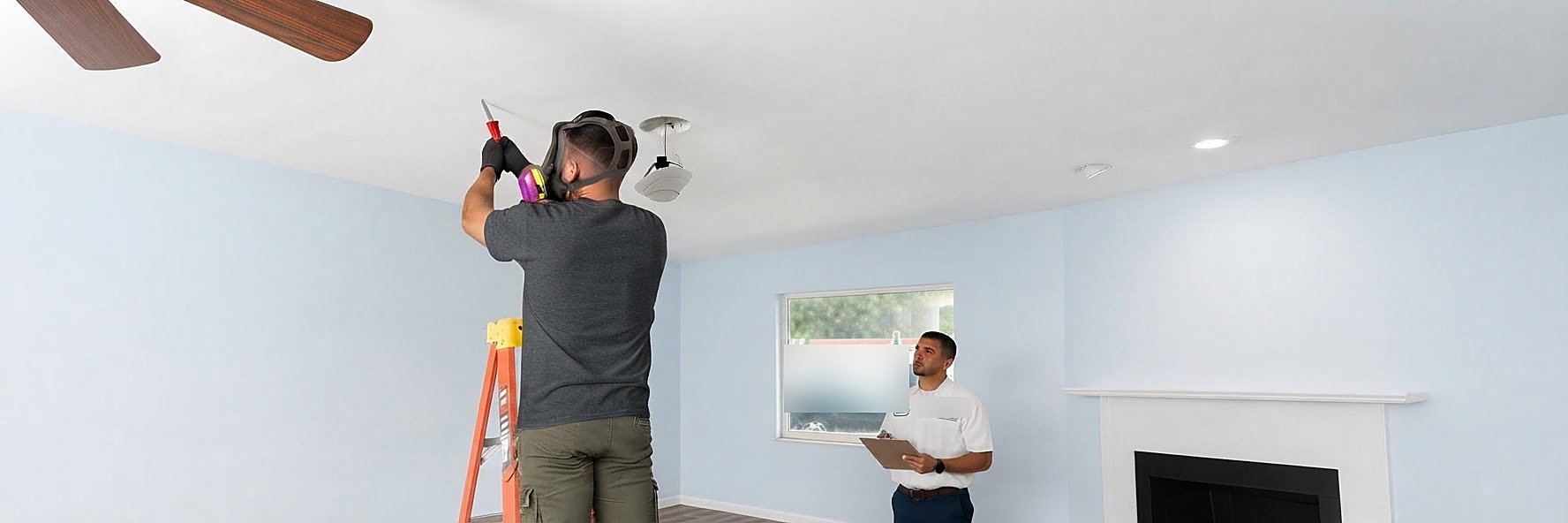
What should you do about a water-damaged ceiling?
Stop the water, protect the room, and find the source before anyone paints or patches. In Miami, heat, humidity and summer storms mean a wet ceiling can grow mold within days, so fast action saves drywall.
Most leaks start with a roof leak, a clogged AC drain line, a bathroom fixture, or a condo unit above yours. Each one is repaired differently, which is why a stain alone never tells you the fix.
Pro tip. Circle the stain edge with a pencil and note the date. If the ring grows, the leak is still active.
Ceiling repair for every kind of leak
Ten specific problems, each with its own cause and fix.

Roof Leak Ceiling Repair
Tile and flat roofs, flashing and underlayment failures that soak attic insulation and drywall below. Fix the roof path, then the ceiling.
Learn more
AC Leak Repair
Clogged condensate lines and overflowing drain pans.
Learn more
Upstairs Neighbor Leak
Condo leaks from the unit above, with HOA steps.
Learn more
Bathroom Ceiling Leak
Shower pans, tub overflows, supply lines and failed grout above the ceiling.
Learn more
Water Heater Leak
Attic and closet tanks that fail above living space.
Learn more
Storm & Hurricane
Wind-driven rain damage and emergency drying.
Learn more
Water Stain Repair
Seal, prime and repaint so stains stay gone.
Learn more
Popcorn Ceiling
Texture patching with matching finish.
Learn more
Sagging Ceiling
Safe relief and replacement of saturated drywall.
Learn more
Emergency Water Extraction
Trapped water behind a bulging ceiling removed before it collapses.
Learn moreWhat does your ceiling look like?
Pick the closest match to see the likely cause.
Warning. Stay out of a room with a sagging ceiling, and switch off power to that area if water is near light fixtures.
How ceiling water damage happens, how it is found, and what comes next
Why do ceilings leak in Miami homes?
A ceiling is the last surface water reaches, so the stain you see is often far from the origin. Water runs along joists, pipes and drywall seams before it shows. Roof failures are the classic source: slipped or cracked tiles, worn flashing around vents and chimneys, and aging underlayment let rain reach attic insulation, which soaks up water and then drips through the drywall. Our roof leak ceiling repair page covers that path in detail.
Inside the home, plumbing and equipment cause most of the rest. A failed shower pan or tub overflow soaks the ceiling below, a supply line or drain joint can weep for weeks, and an attic water heater or air handler can fail directly above a bedroom. South Florida's humid climate makes air conditioners produce a lot of condensation, so a clogged condensate line or full drain pan is one of the most common reasons for a stain near a vent.
In condos and apartments, the source may not be in your unit at all. A leak from the unit above can travel through shared floors and chases, which is why upstairs neighbor leaks often involve building management as well as a repair provider.
How is the leak actually found?
Good repair starts with confirming the source instead of guessing. A moisture meter reads dampness inside drywall without cutting it open, and a thermal camera shows temperature differences that point to wet areas. Plumbing checks, such as running each fixture in turn or testing supply and drain lines, isolate pipes from everything else.
The timing of the drip is a strong clue. A leak that appears only after rain points to the roof or exterior. One that appears only when the AC runs points to condensation. A constant leak, rain or shine, usually means pressurized plumbing, and a water heater leak often shows up near where the tank sits.
Warning. Do not sand or scrape an older textured ceiling before it is tested. Read our popcorn ceiling repair guide first.
What happens after the source is fixed?
Wet materials come out first. Saturated drywall and soaked insulation are removed, because they will not dry reliably in place. The area is then dried with air movers and dehumidifiers until moisture readings return to normal, which matters in a humid city where damp drywall can grow mold in a day or two.
Only then does the cosmetic work begin: patching, texturing to match the ceiling, sealing with a stain-blocking primer and repainting. Skipping the primer is why many water stains bleed back through. If the ceiling has sagged, the board usually needs replacing, as explained in our sagging ceiling repair guide.
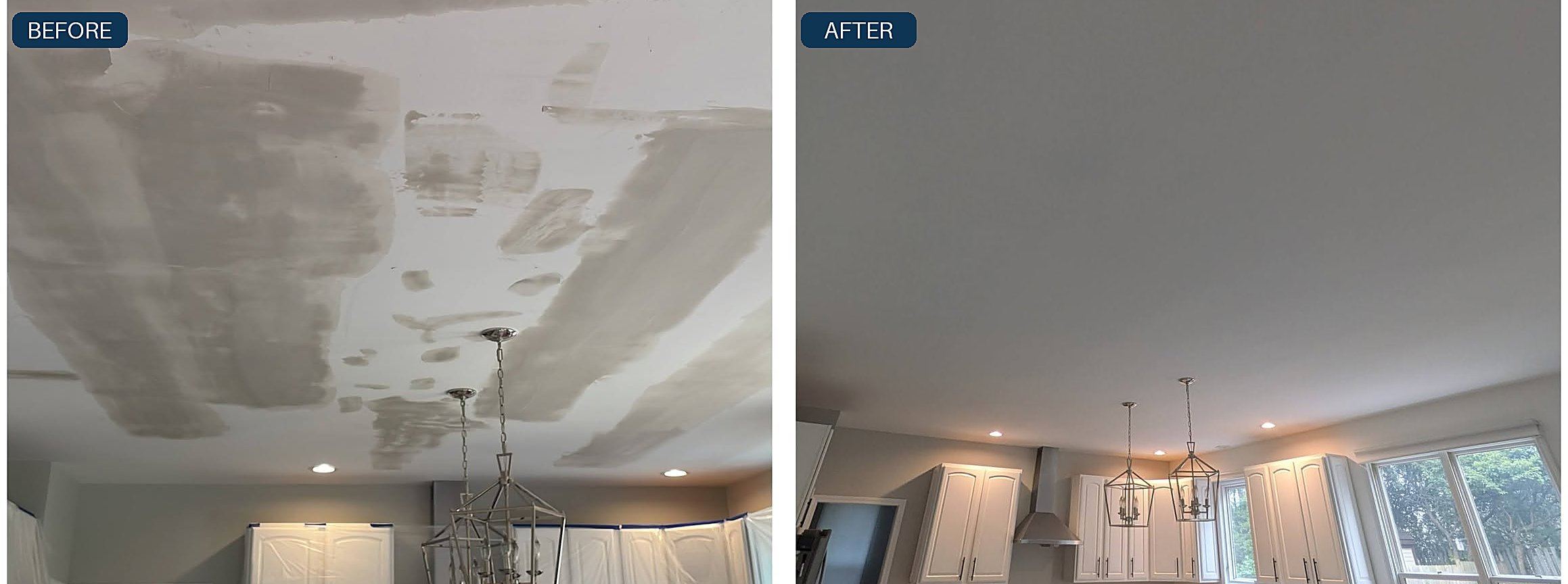
What does a typical repair timeline look like?
Every job differs, but the sequence is predictable. On day one the priority is safety and stopping the water: occupants move out from under any bulge, power near wet fixtures is checked, and the source is found or temporarily controlled. Next comes assessment, where moisture meters and thermal imaging show how far the water traveled, followed by removal of materials that cannot dry in place, such as saturated insulation and soft drywall.
Drying is the longest and least visible stage. Air movers and dehumidifiers run until readings return to normal, and a careful provider records those readings so you have proof. Only then does the finishing work begin: patching, texturing to match, sealing with stain-blocking primer and repainting. If any step is skipped, the usual result is a stain or mold that returns within months. Ask for the sequence in writing, and ask when each stage is expected to finish.
Roof or plumbing repairs may run alongside this schedule or before it, depending on the source. A temporary tarp or shutoff can buy time while parts or permits are arranged. Keep your provider informed about any new drips, because changes in the pattern often reveal a second source that was hidden behind the first.
How does Miami’s climate change the repair?
Warm, humid air slows drying, so wet drywall and insulation stay damp far longer than they would in a dry climate. That is why moisture readings, not appearance, decide when a ceiling is ready to close, and why running dehumidifiers and air movers is a normal part of the job. Frequent heavy rain also means a roof defect is tested again and again, so a leak that seems minor in the morning can be soaking insulation by evening.
Can you prevent ceiling leaks?
Many leaks are preventable with ordinary upkeep. Have the roof checked before storm season, clear gutters and flat-roof drains, and replace worn flashing and cracked tiles promptly. Change air conditioner filters, keep the condensate drain clear, and ask a technician about a float switch. In bathrooms, repair cracked grout and caulk, replace aging supply lines and listen for slow drips. Know where your water shutoff is, and in a building, know how to reach management. Photograph your ceilings in good condition so any later change is easy to show.
Finally, keep a short list of phone numbers near your shutoff: your building manager, your insurer and a trusted repair contact. In a leak, those few minutes saved can protect a lot of drywall.
None of this guarantees a leak-free ceiling, but it shortens the time between a problem starting and someone noticing it. Because every hour matters when water is behind drywall, noticing early is often worth more than any single repair technique. If you do see a stain, mark its edge with a pencil and date it, then compare a day later.
From the first call to a dry, repaired ceiling
Five clear steps, so you always know what happens next.
- 1
Call or check symptoms
You: describe the stain, the room and whether it drips or sags.
We: ask a few quick questions and flag anything urgent. - 2
Get matched locally
You: confirm your address and access.
We: connect you with an independent provider who serves your area. - 3
Find the source first
Provider: inspects, maps moisture and traces the leak before any repair starts.
- 4
Agree the scope
You: get a written scope and quote from the provider and decide whether to proceed.
- 5
Dry, repair, restore
Provider: removes wet materials, dries the cavity, then patches, primes and repaints.
Referral disclosure: MiamiRestorationCore refers calls to independent providers and does not perform the repairs.
What does waiting cost you?
A small leak becomes a bigger repair when it is left alone.
Drywall that stays wet loses strength, so a patch job turns into a replacement. Wet insulation stops insulating and holds moisture against framing. In Miami's warm, humid air, mold can start within a day or two, and it adds cleanup work that a fast response avoids.
Water near light fixtures or wiring is also an electrical hazard, and a heavy, bulging ceiling can drop without warning. If a storm caused the damage, read our storm and hurricane ceiling repair page, and photograph everything before anything is removed. Many insurance policies expect prompt action and documentation, so check your own policy.
When water is already trapped above a bulging ceiling, emergency water extraction is the safest route.
What affects repair cost?
Every job is priced after an inspection, because the source, size and finish all change the work.
| Factor | Why it matters |
|---|---|
| Leak source | A plumbing fix and a roof repair are different trades. |
| Damage size | A patch costs less than replacing saturated drywall. |
| Drying needs | Wet insulation or framing adds drying time. |
| Ceiling finish | Popcorn texture takes extra matching work. |
| Access | Attic or high-rise access changes labor. |
Serving Miami neighborhoods
Local pages for the areas we serve most.
Schematic map, not to scale. Select an area to see local notes and open its page.
Hover, focus or tap a neighborhood on the map to see what we typically see there.
High-rise districts like Brickell, Downtown Miami, Edgewater and Midtown Miami see more upstairs-neighbor leaks, while older homes in Coral Gables, Coconut Grove and Little Havana lean toward roof and plumbing age. We also cover Wynwood, Miami Beach and North Miami.
Brickell. Dense condo and apartment towers south of the Miami River, where leaks often come from shared plumbing, the unit above or AC condensate, and building management is part of every repair.
Miami Beach. A barrier island between the ocean and Biscayne Bay, with salt air, storm exposure and a mix of older low-rise buildings and newer towers.
Edgewater. A bayfront neighborhood north of Downtown with towers beside older low-rise buildings, so roofs, plumbing and shared systems all matter.
Coconut Grove. Bayfront, tree-shaded and home to older houses and newer condos, where debris on roofs and storm damage are common concerns.
Coral Gables. A separate city planned in the 1920s, with many older homes whose roofs, plumbing and ceiling finishes are showing their age.
Downtown Miami. The central district on the bay, packed with high-rises where risers, rooftop equipment and neighbors above drive most ceiling leaks.
Little Havana. Older concrete block houses and small multifamily buildings, where aging roofs, water heaters and shared lines are frequent sources.
Wynwood. An arts district of converted warehouses and low-rise buildings, where flat roofs, seams and rooftop equipment are the usual suspects.
Midtown Miami. A mixed-use area between Wynwood and Edgewater, where apartment and condo leaks tend to trace to the unit above, AC systems or bathrooms.
North Miami. A separate city just north of Miami with single-family homes and condos, where roofs, bathrooms and older water heaters lead the list.
How do you choose a repair provider you can trust?
Ask to see license and insurance details before work begins.
Whoever you hire, ask for license and insurance details and check license status with Florida’s contractor licensing agency where it applies. Ask for a written scope that says what will be removed, dried and repaired, and how dryness will be confirmed with moisture readings before the ceiling is closed.
Compare more than one quote when the situation is not an emergency, be cautious about large upfront payments, and keep every photo and receipt. Our about page explains how referrals work in more detail, and our contact page lists what to have ready when you call.
Common ceiling leak questions
Is a water-stained ceiling an emergency?
A sagging, bulging or actively dripping ceiling is urgent because trapped water can bring the drywall down. A dry, old stain is not an emergency but still needs its source found.
Should I poke a hole in a bulging ceiling?
Only if a professional tells you to, or if collapse looks imminent and the room is empty. Controlled drainage into a bucket is safer than a sudden release.
Can I just paint over a ceiling water stain?
Not until the source is fixed and the drywall is dry. Paint over a damp or active leak bleeds through again and can hide mold.
How does the referral work?
MiamiRestorationCore is a referral service. You call, we connect you with an independent local provider, and the provider performs and is responsible for the work.
How fast can mold grow on a wet ceiling?
Mold can begin developing within a day or two in warm, damp conditions, and Miami's humidity speeds that up. Drying the area quickly is the best prevention.
Will insurance cover ceiling water damage?
It depends on your policy and the cause. Sudden accidental leaks are often treated differently from long-term seepage, so document the damage with photos and contact your insurer.
Why does my ceiling only leak when it rains?
Rain-only leaks usually point to the roof, flashing or exterior walls. Water can travel along framing before it drips, so the entry point is often away from the stain.
Can my air conditioner cause a ceiling stain?
Yes. A clogged condensate line or overflowing drain pan can drip into the ceiling, most often near a vent or an attic air handler.
Do I need to replace the drywall or can it be patched?
A small, dry stain can often be sealed and repainted. Drywall that is sagging, soft, crumbling or soaked usually needs replacement.
What if the leak comes from my neighbor's unit?
Photograph the damage, notify the neighbor and building management, and ask that the water be shut off. Our upstairs neighbor leak page explains the next steps.
What to have ready
A few details help the provider understand the problem quickly.
- Your address and unit or floor
- Where the stain is and how large it is
- Whether it drips, bulges or sags
- When it appears: rain, AC running or all the time
- Photos of the ceiling and any room above
- Your insurance details, if you plan a claim
Talk to someone about your ceiling
Have the room, the stain size and any dripping details ready.
(512) 555-0198Call now